OVERVIEW
Laser treatment for melasma will help you say bye-bye to melasma and hello to perfectly virgin skin.
Our laser treatment for melasma protocol includes multiple lasers, customized for your skin, that will stimulate your own body to dissolve the melasma away.
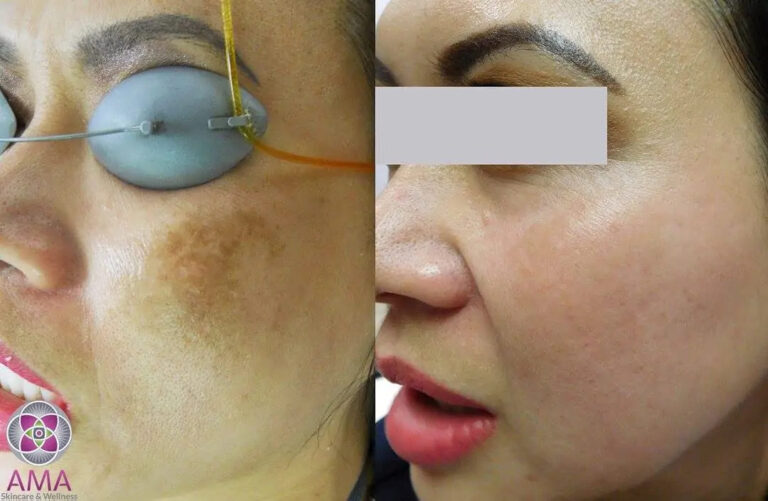
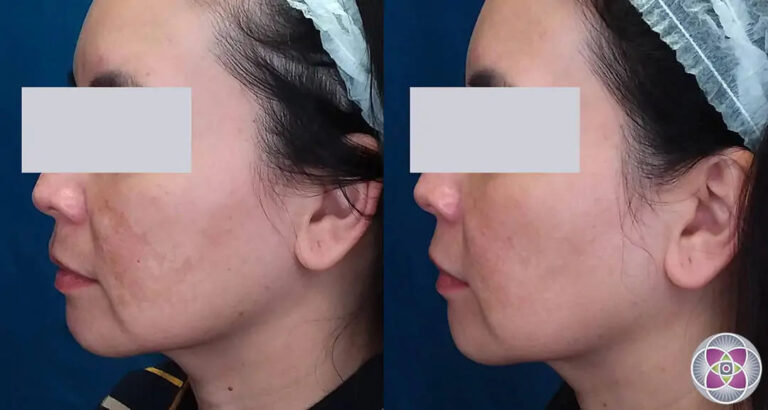
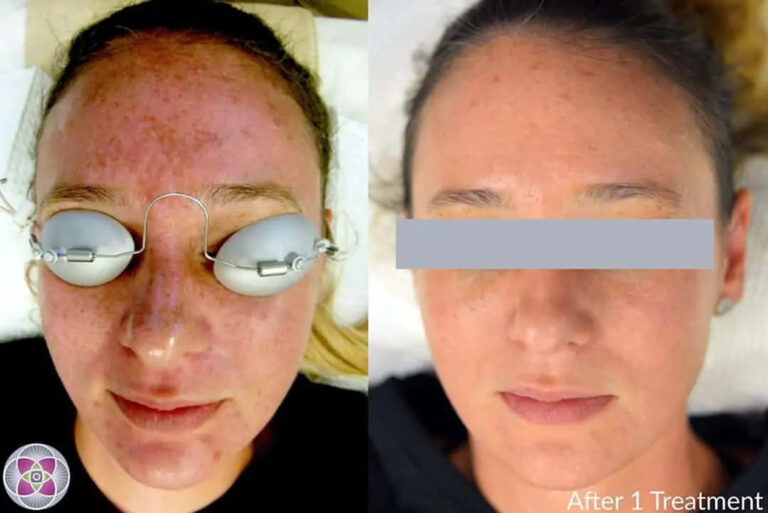
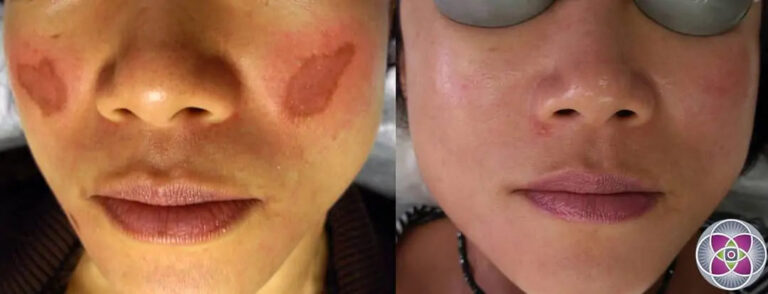
Explore the photos below to see individual patient results before and after our laser melasma treatment.
Melasma is a dark skin discoloration caused by excessive melanin found predominantly in women on sun-exposed areas of the face. It’s a very common skin disorder that can be effectively treated with AMA Regenerative Medicine & Skincare’s advanced laser treatments.
Those most affected by this skin disorder are women with medium to darker skin tones. Women experiencing hormonal fluctuations in pregnancy, or while taking contraceptive pills or hormone replacement therapy, have a greater incidence of this condition. The risk is even higher for those over-exposed to sunlight, or whose skin has suffered chronic irritation from external sources such as chemicals, abrasion and even waxing.
Typically, melasma first appears as dark spots on the face such as sunspots or sun damaged skin, and later develops into a more extensive “mask-like” coverage of the skin, with an uneven, brown-toned discoloration found mostly on the cheeks, nose, lips and forehead. See above to view before and after photos of laser melasma treatments.
The color of skin affected by melasma will vary depending on the concentration, density and depth of melanin at different locations within the affected area. Accordingly, the most effective melasma treatments often require a combination of different lasers. Fortunately, AMA Regenerative Medicine & Skincare has 7 different types of lasers that effectively target virtually all types of skin discolorations.
Melasma afflicts primarily mid-color skin, whose genetic code makes their skin hypersensitive and hyperactive to almost any irritation. Thus, especially in the case of an un-stable melasma, even a treatment designed to remove excess melanin might actually stimulate the already hypersensitive and overactive melanocytes inducing them to make even more melanin, making the melasma worse than before.
This includes:
Virtually every day in our office, new patients arrive from all over the country and even the world who show us pictures of how their melasma was made worse by previous treatments they received by well-meaning doctors, and at fancy med-spas.
So, if the melasma is so hypersensitive to stimulation, how can it be successfully treated?
The answer shocks most people:
By not trying to remove the melanin…. Rather, by getting your body to remove the melanin.
Let me explain: Everywhere on your body, the physiology of your skin is maintaining the proper balance of melanin in your skin. Its only in a few melasma spots on your face that are “wacked” out. Thus, rather than interfering with or circumventing your physiology we want to engage it, and remind it to do to the skin of your melasma what it is doing successfully everywhere else on your body. This is a physiological approach to restoring health and homeostasis to your skin.
Generally conventional doctors choose to treat the melasma with a laser that will target and vaporize the melanin. However, this delivers enough energy to the skin that also irritates the hypersensitive melanocytes, which is likely to make the melasma worse.
Everything on our website comes from reputable publications, books and scientific journals, most of which are available on PubMed and other government websites. These include Meta-Analysis’, Randomized Controlled Trials, Clinical Trials, Systematic Reviews, Books and Documents. We encourage you to read the science, in order to separate fact from fiction, so that you can arrive at a full understanding of what is best for your skin. We would be honored to be a part of that educational journey with you.
Ready to Begin?
Subscribe to receive the latest advances in regenerative medicine and exclusive health insights.
Licensed Medical Practice State Medical Board Certified American Association for Regenerative Medicine