Brooklyn, NY 10036, United States
Mon – Fri: 8:30 am – 5:00 pm, Sat – Sun: Closed

Book an Appointment

Fill out this simple form and we’ll call you right back.

  • Brooklyn, NY 10036, United States
  • Mon – Fri: 8:30 am – 5:00 pm, Sat – Sun: Closed
  • 1-949-428-4500

Laser Treatment for Melasma

Even the most challenging cases of melasma, no matter your skin color, can be effectively treated with AMA Regenerative Medicine & Skincare’s advanced laser protocols.

OVERVIEW

Laser Treatment for Melasma

Laser treatment for melasma will help you say bye-bye to melasma and hello to perfectly virgin skin.

Our laser treatment for melasma protocol includes multiple lasers, customized for your skin, that will stimulate your own body to dissolve the melasma away.

Media Right

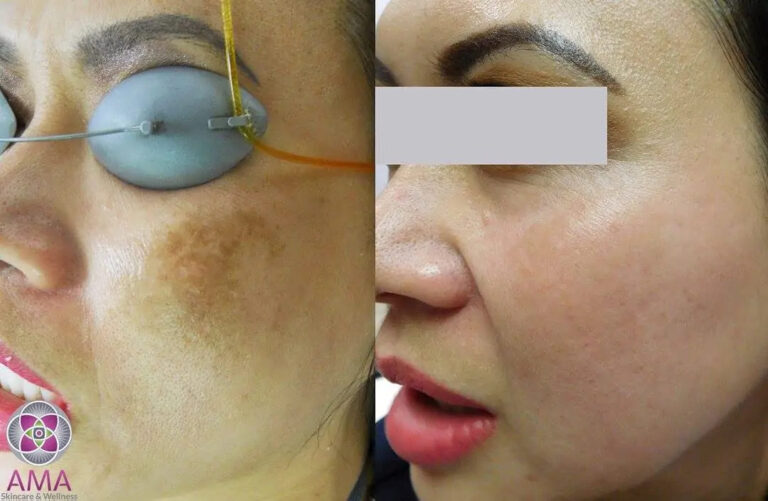
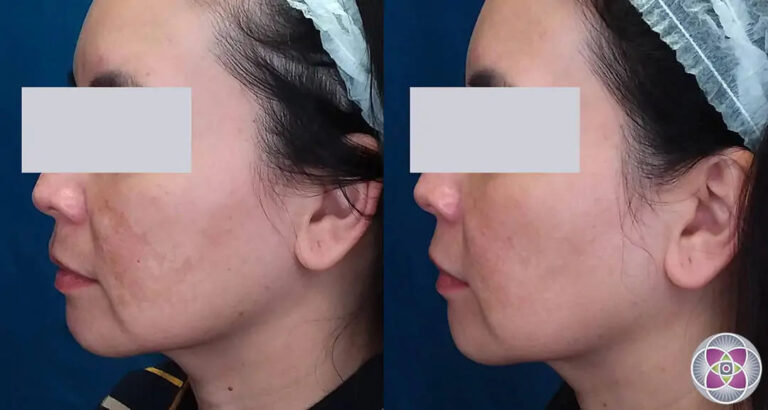
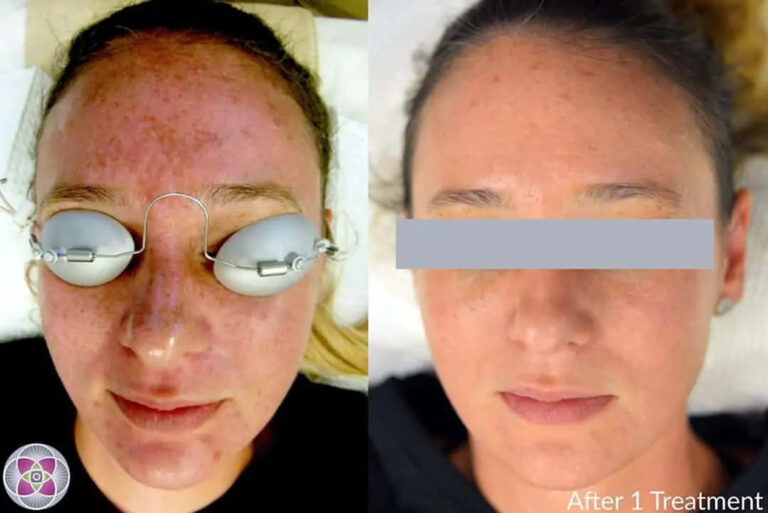
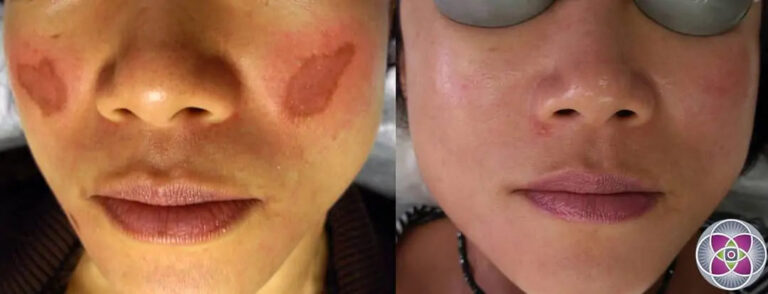
Explore the photos below to see individual patient results before and after our laser melasma treatment.

What is Melasma?

Melasma is a dark skin discoloration caused by excessive melanin found predominantly in women on sun-exposed areas of the face. It’s a very common skin disorder that can be effectively treated with AMA Regenerative Medicine & Skincare’s advanced laser treatments.

Who gets Melasma

Those most affected by this skin disorder are women with medium to darker skin tones. Women experiencing hormonal fluctuations in pregnancy, or while taking contraceptive pills or hormone replacement therapy, have a greater incidence of this condition. The risk is even higher for those over-exposed to sunlight, or whose skin has suffered chronic irritation from external sources such as chemicals, abrasion and even waxing.

What Melasma Looks Like

Typically, melasma first appears as dark spots on the face such as sunspots or sun damaged skin, and later develops into a more extensive “mask-like” coverage of the skin, with an uneven, brown-toned discoloration found mostly on the cheeks, nose, lips and forehead. See above to view before and after photos of laser melasma treatments.

The color of skin affected by melasma will vary depending on the concentration, density and depth of melanin at different locations within the affected area. Accordingly, the most effective melasma treatments often require a combination of different lasers. Fortunately, AMA Regenerative Medicine & Skincare has 7 different types of lasers that effectively target virtually all types of skin discolorations.

Why is Melasma so Hard to Treat?

Melasma afflicts primarily mid-color skin, whose genetic code makes their skin hypersensitive and hyperactive to almost any irritation. Thus, especially in the case of an un-stable melasma, even a treatment designed to remove excess melanin might actually stimulate the already hypersensitive and overactive melanocytes inducing them to make even more melanin, making the melasma worse than before.

This includes:

Virtually every day in our office, new patients arrive from all over the country and even the world who show us pictures of how their melasma was made worse by previous treatments they received by well-meaning doctors, and at fancy med-spas.

Treating Hypersensitive Melasma

So, if the melasma is so hypersensitive to stimulation, how can it be successfully treated?

The answer shocks most people:

By not trying to remove the melanin…. Rather, by getting your body to remove the melanin.

Let me explain: Everywhere on your body, the physiology of your skin is maintaining the proper balance of melanin in your skin. Its only in a few melasma spots on your face that are “wacked” out. Thus, rather than interfering with or circumventing your physiology we want to engage it, and remind it to do to the skin of your melasma what it is doing successfully everywhere else on your body. This is a physiological approach to restoring health and homeostasis to your skin.

Generally conventional doctors choose to treat the melasma with a laser that will target and vaporize the melanin. However, this delivers enough energy to the skin that also irritates the hypersensitive melanocytes, which is likely to make the melasma worse.

References — Read the Science Behind Laser Treatment for Melasma

Everything on our website comes from reputable publications, books and scientific journals, most of which are available on PubMed and other government websites. These include Meta-Analysis’, Randomized Controlled Trials, Clinical Trials, Systematic Reviews, Books and Documents. We encourage you to read the science, in order to separate fact from fiction, so that you can arrive at a full understanding of what is best for your skin. We would be honored to be a part of that educational journey with you.

  1. Lee BW, Schwartz RA, Janniger CK. Melasma. G Ital Dermatol Venereol. 2017 Feb;152(1):36-45.
  2. Lee YS, Lee YJ, Lee JM, Han TY, Lee JH, Choi JE. The Low-Fluence Q-Switched Nd:YAG Laser Treatment for Melasma: A Systematic Review. Medicina (Kaunas). 2022 Jul 14;58(7):936.
  3. Lai D, Zhou S, Cheng S, Liu H, Cui Y. Laser therapy in the treatment of melasma: a systematic review and meta-analysis. Lasers Med Sci. 2022 Jun;37(4):2099-2110.
  4. Zhang Y, Zheng X, Chen Z, Lu L. Laser and laser compound therapy for melasma: a meta-analysis. J Dermatolog Treat. 2020 Feb;31(1):77-83.
  5. Situm M, Kolić M, Bolanca Z, Ljubicić I, Misanović B. Melasma–updated treatments. Coll Antropol. 2011 Sep;35 Suppl 2:315-8.
  6. Cassiano DP, Espósito ACC, da Silva CN, et al. Update on Melasma-Part II: Treatment. Dermatol Ther (Heidelb). 2022 Sep;12(9):1989-2012.
  7. Feng J, Shen S, Song X, Xiang W. Efficacy and safety of picosecond laser for the treatment of melasma: a systematic review and meta-analysis. Lasers Med Sci. 2023 Mar 10;38(1):84.
  8. Chen J, Yu N, Peng L, et al. Efficacy of low-fluence 1064 nm Q-switched Nd: YAG laser for the treatment of melasma: A meta-analysis and systematic review. J Cosmet Dermatol. 2022 Jul;21(7).
  9. Hawwam SA, Ismail M, El-Attar YA. Split-face comparative study between intradermal tranexamic acid injection alone versus intradermal tranexamic acid injection combined with Q-switched Nd:YAG laser in melasma treatment. Lasers Med Sci. 2022 Jun;37(4):2193-2201.

Frequently Asked Questions

A.Melasma is usually caused by hormonal shifts and is often referred to as the “mask of pregnancy”. The starting of birth control pills can also cause it to appear in some women that are particularly sensitive to these shifts. Even switching to a new brand of birth control can cause the brown patches to arise. For some, the melasma will simply fade away once their hormones return to their normal state. For instance, after giving birth or stopping the use of birth control pills. For others, treatment of the melasma may be the only solution to make it go away. Melasma is also made worse with excessive exposure to the sun. There is not a hormonal component associated with sun spots. Sun spots are caused by over exposure to the sun for long periods of time. As we age, we are more likely to get sun spots if we spend a lot of time in the sun. Laser treatment for melasma is more difficult than for sun spots, however, both can be successfully treated and removed.
A.The red marks are actually inflammation left over from the acne not pigmentation. They are caused by vascularization that was left over from inflammation. They are not caused by melanin, your skin’s natural pigment. The good news… Yes! Such marks can easily be treated with lasers.
A.Our laser melasma treatment protocols can more than likely help. First, we need to establish the likely cause of your melasma with a thorough evaluation. This will allow us to determine if the melasma is “stable” or “unstable”. During the evaluation we often times perform test treatments with different lasers. We need to understand how your specific skin responds to the different technologies. This allows us to customize the most effective treatment for your particular skin that will achieve the best possible results.
A.We are confident that we can provide you with treatments that will achieve successful results for your skin. However, before responding specifically to your concerns about the potential for your melasma to return, let me explain in general terms the bases of why our laser treatments are successful. A primary reason for our success in the clinical science of aesthetic dermatology, is because we customize laser protocols for each patient according to their skin’s needs. In tougher cases, such as a melasma this may also require that we first try a number of small test treatments in order to establish which protocol methodology is best suited for your skin. We call this, “finding the physiological roadmap” to a healthy and successful outcome. In every patient, the roadmap is not found in a text book or medical reference. The roadmap is as unique as the patient, and is inherent in the patient’s own physiology. Thus until we “consult” the patient’s physiology by engineering an initial test protocol, we won’t know with certainty what the best course of treatment is. Your case is one that requires some testing, and you will be pleased to know that we do not charge for the testing. Now, specifically about a case of unstable melasma such as yours. Yes, in such cases, even after a successful reduction of the initial melasma, if the patient’s skin is subjected to the conditions that stimulates their melasma, the melasma might return. For some patients, they unfortunately have to “chase” the melasma off their skin every few years, until such time as their melasma becomes stable and can be removed permanently.
A.In some cases, this is correct. There are two basic types that melasma can be differentiated into, stable and unstable. In a stable melasma, the extra pigmentation is usually associated with some kind of event that instigated the hyper-pigmentation. The event could be the hormonal fluctuations associated with pregnancy, or it could also be some kind of skin irritation or trauma that produced the hyper-pigmentation. In these cases, once the melasma has appeared, it remains stable, and doesn’t change or flare up from day to day, or become super sun sensitive. We have excellent results treating these kind of stable melasma… with long term positive outcomes. However, the unstable melasma is a different story. In these cases there is some sort of underlying systemic condition that causes the melasma to change almost on a daily basis. These are typically very sun-sensitive, and will flare up with the smallest of provocations. Even a hot shower can cause them to flare up. This kind of melasma is extremely difficult to treat. We might be able to chase it away, but it is likely to come back in a matter of weeks… and sometimes even days.
A.Yes! We treat skin type 4 with pigmentation issues every day of the week. In fact, melasma is most common in that skin type… and patients with that skin type fly in from all over the world for us to treat their melasma.
A.We charge by time in our medical practice. So the larger and more complex your melasma is, the more time will be required to treat it and the more it will cost. However, as the Melasma shrinks and lightens with each treatment, less time is required and thus the price will go down. If you are a local patient, it is best to come in for a personal consultation and evaluation. This is free at our practice. If you are a long distance patient, we can get a ball-park idea of what is going on with your skin by evaluating photographs and talking to you over the phone or via video conferencing.
A.It is not unusual for a melasma to travel around your face. It can suddenly disappear in one area and appear in another. No one knows exactly why this can happen.
A.The PICO laser is the latest laser technology for treating pigmentation. The frequency of energy being emitted from the laser is also an important factor. Results vary from person to person. It is often a combination of different lasers that work the best for removing melasma.
A.PRP can be effective in reducing melasma on some skin. What is interesting is no one knows exactly why. We must see a patient in person to determine if PRP is a treatment that will work for their melasma.
A.Every change in hormonal balance can trigger a melasma in some women. The good news though is that for most people, when menopause is complete and the hormonal changes have stabilized, the melasma will fade away on its own.

What Our Patients Say

"The hyperpigmentation on my upper lip was embarrassing. I called it my tan stache. Dr. Alice Pien who did the lasers is brilliant at what she does. She is also very warm, easy to talk with and extremely intelligent in her field. AMA has such a large variety of lasers, which is really to the clients benefit!"
Kristen — Laser Melasma Treatment
"I travel from NYC to CA to be treated for melasma by Dr. Pien. She is a miracle worker and I'm so extremely happy with the results. Dr. Pien is incredibly knowledgeable and she customized a treatment plan that was specifically for my skin type and my skin has never looked better."
Neeli — Flew Cross-Country for Melasma Treatment
"Dr. Pien was able to sit down with her and create a skin plan to effectively help her. After 2-3 sessions my mom already saw amazing results and for once I was genuinely surprised and didn't have to lie about seeing a difference in her skin."
Evette — Melasma Treatment for her Mom
"Dr. Pien worked with me to the point that I do not have to wear makeup anymore. Before, I would not be caught dead outside without makeup. Now I feel very confident, I can walk around without makeup on. I actually don't wear foundation anymore! I just put on sunblock."
Mina — Laser Treatment for Melasma

Ready to Begin?

Restore your body's vitality

schedule your personalized skincare consultation today